Monday, March 7, 2016

Thunderstorm Storm


Thunderstorm Storm


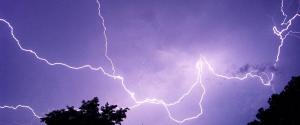
 A Thunderstorm is a rain shower which you can hear thunder. It’s produced by a cumulonimbus cloud, usually producing gusty winds, heavy rain and sometimes hail. If a Thunderstorm is labeled as severe it has to contain hail that is one inch or large and/ or wind gusts greater than 50 knots or a tornado. It is probable that there are around 1,800 thunderstorms that occur across our planet every day.

Thunder storms are likely to occur more frequently during the sessions of spring and summer but can occur throughout the year. Thunder Storms can cause all kinds of damage which includes; flash floods, which kills more people each year than hurricanes, tornadoes or lightning. Lightning during a storm can cause fires, hail damages cars and windows, and can kill livestock. Strong winds (up to more than 120 mph) can knock down trees, power lines and mobile homes.


Thunderstorms in Staten Island 

 Our group was assigned thunderstorm wind events for Richmond County, New York. During the years 1995-2015, there were a total of 46 thunderstorm wind events. The two months that we focused on was July and August. In July, there were 12 such events while in August there were 8.  Let's view our severe weather

Image result for thunderstorms


By Alyssa Edgeworth and Sara Pascarella 

Floods!

A flood is a natural event or occurrence where a piece of land or area that is usually dry land suddenly becomes submerged under water. Some floods can occur suddenly or recede quickly. Others taken days or even months to discharge. When floods happen in an area where people live, the water can carry along objects like house, bridges, cars, and even people. 


Heavy Rain

As warm air rises, it cools and causes condensation of water droplets. Clouds start to form when the air becomes supersaturated, forcing water vapor in the atmosphere to condense into visible liquid cloud droplets. When the droplets can no longer be supported by the air, it then falls to the ground. 


Photo courtesy of http://epawaweather.com/

Websites for further resources:

www.weatherwizkids.com

http://www.edinformatics.com/

Posted by Jennifer Diorio & Jessica Keller

Heavy Snow

Nadine Seniw, Samantha Lombardi

Heavy snow is caused by low pressure systems that move along the coast. It occrrs during the winter months because our location is furthest from the sun and the cold weather causes the rain to turn into ice and snow. The two months in which this event is the most severe is during January and February. In order to calculate the probability, we found the total number of heavy snow events, over the total number of possible outcomes. In January, the probability of an occurrence of heavy snow is 6 out of 26, or 23%. In February, the probability of a heavy snow occurrence is 12 out of 26, or 46%. I wouldn't want to get stuck on the Island in February!


http://www.ncdc.noaa.gov/stormevents/listevents.jsp?eventType=%28Z%29+Heavy+Snow&beginDate_mm=05&beginDate_dd=01&beginDate_yyyy=1994&endDate_mm=05&endDate_dd=31&endDate_yyyy=2015&county=RICHMOND%3A85&hailfilter=0.00&tornfilter=0&windfilter=000&sort=DT&submitbutton=Search&statefips=36%2CNEW+YORK

Hail

Image result for hailHail is a solid form of rain (precipitation). It usually consist of balls or irregular pieces of ice. According to the data from National Climatic Data Center, for the last 20 years, hail is more likely to occur during the months of June and July in New York, Richmond County.

Hail can range from pea size to the size of grapefruits. The larger the hail, the larger the thunderstorm is that forms the hail. This is how hail forms inside of those beautiful thunderheads.


If you would like to learn more about hail, please visit More about Hail

Flash Floods!!


Flash floods occur rapidly and are very dangerous. Just a few inches of water from a flood can cause tens of thousands of dollars in damage. A flash flood is characterized by a quickly rising stream with depths of water that can reach well above the banks of the creek. Flash floods often bring walls of water 10 to 15 feet high.


Image result for flash floods

photos - Christian Walker


Websites for further resources -


http://www.nssl.noaa.gov/education/svrwx101/floods/


http://www.redcross.org/


Websites - Patricia Spinelli


Grace Matera